GATSBY'S
Matrilocality In Simple Hunting Economy Eleanor Leacock 1979 Innu Anthropology
By Eleanor Leacock
Softcover, Wraps • University of New Mexico
Description
ffered here is a highly significant anthropological study by the renowned Marxist feminist scholar Eleanor Leacock. Matrilocality in a Simple Hunting Economy (Montagnais-Naskapi) is a foundational text that fundamentally challenged the 20th-century "Family Hunting Territory" debate. Drawing on meticulous fieldwork and ethnohistoric data from the Labrador Peninsula, Leacock provides a compelling critique of universal male dominance. She demonstrates that egalitarian social structures and matrilocal residence were normative among the Innu (Montagnais-Naskapi) prior to the transformative and destructive impact of the colonial fur trade. This 1979 edition is an essential resource for collectors of Indigenous studies, feminist theory, and North American ethnohistory. It remains a critical life-raft for scholars reconciling scientific rigor with a commitment to understanding the true origins of social hierarchy. Synopsys: Matrilocality in a Simple Hunting Economy (Montagnais-Naskapi)' by Eleanor Leacock provides an in-depth study of the Montagnais-Naskapi tribes of Labrador and Quebec, who historically adhered to a matrilocal residence pattern - a system where a married couple resides with or near the wife's parents. Leacock explores the social, economic, and cultural implications of this practice in relation to the tribe's subsistence hunting economy. While focusing on notions of gender equality, familial structures, and economic organization within the tribe, the book also examines the impact of European colonization and its disruption of these sociocultural structures and practices. This book offers a rich anthropological insight into indigenous societies, their adaptive strategies, and the devastating influences of colonialism.
Synopsis
Title: Matrilocality In Simple Hunting Economy (Montagnais-Naskapi)
Author/Publisher: Eleanor Leacock, University of New Mexico (United States)
Publication Year: 1979
Format: Staple-Bound Softcover
Published in 1979, Eleanor Leacock's seminal work, 'Matrilocality In Simple Hunting Economy (Montagnais-Naskapi)', offers a profound anthropological examination of social organisation among the Innu (Montagnais-Naskapi) people of the Labrador Peninsula. Leacock, a highly regarded Marxist feminist scholar, brings her incisive analytical lens to bear on the dynamics of residence patterns within a hunter-gatherer society.
This study is recognised for its significant contribution to the 'Family Hunting Territory' debate, a central discussion in 20th-century anthropology concerning land tenure and social structure among indigenous populations. Leacock's meticulous fieldwork and comprehensive ethnohistorical research provide a compelling counter-narrative to prevailing theories, demonstrating the complexities of aboriginal economic and social formations.
- Matrilocal Residence Patterns: The core of Leacock's investigation delves into the practice of matrilocality, where married couples reside with or near the wife's parents. This analysis explores how such residence patterns shaped social relations, kinship, and community structure among the Montagnais-Naskapi.
- Hunting Economy & Social Organisation: The book meticulously details the 'simple hunting economy' of the Innu, illustrating the intricate relationship between subsistence strategies and social organisation. Leacock demonstrates how economic activities influenced and were influenced by communal structures and gender roles.
- Montagnais-Naskapi Ethnography: Drawing on extensive data, the work provides a rich ethnographic account of the Montagnais-Naskapi people. It offers invaluable insights into their cultural practices, historical context, and adaptive strategies within their traditional territories.
- Challenging Anthropological Paradigms: Leacock’s research stands as a critical intervention in anthropological discourse, particularly its critique of the then-dominant 'Family Hunting Territory' model. Her findings offered a nuanced understanding of indigenous land use and social cohesion, advocating for more complex theoretical frameworks.
As an original, vintage non-fiction work by a pioneering anthropologist, 'Matrilocality In Simple Hunting Economy' remains a vital text for scholars and enthusiasts of indigenous studies, social anthropology, and feminist theory. Its enduring academic relevance secures its place as a significant acquisition for any serious collection.
Condition
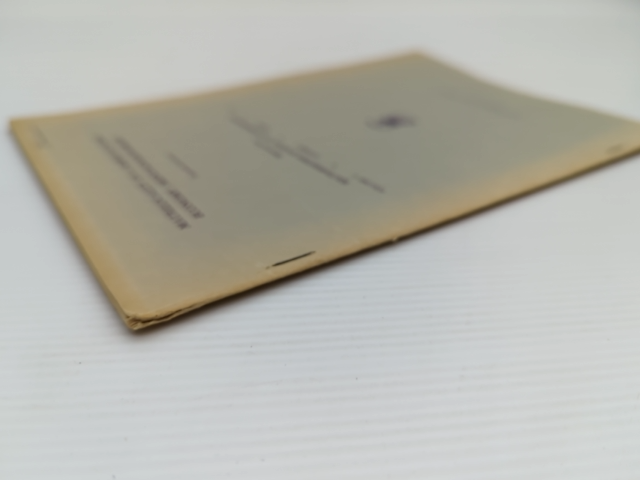
This item has been professionally inspected and is in Acceptable condition. Please refer to the photographs for detailed visual assessment.
Specifications
| Format | Softcover, Wraps |
| Condition | Acceptable |
| Publisher | University of New Mexico |
| Signed | No |
| Subject | History |
| Vintage | Yes |
| Language | English |
| Ex Libris | Yes |
| Inscribed | No |
| Book Title | Matrilocality In Simple Hunting Economy (montagnais-naskapi) |
| Personalised | No |
| Year Printed | 1979 |
| Custom Bundle | No |
| Narrative Type | Non-Fiction |
| Country of Origin | United States |
| Intended Audience | Adults |
| Original/Facsimile | Original |
| Special Attributes | Staple Bound |
Shipping
- We ship every business day, on occasion we may post the same day but expect it to be shipped on the next business day with tracking.
- We offer Express Post & International Shipping.
- Where an item exceeds Australia Post weights or dimensions, we utilise a courier. In this case we are unable to ship to PO Boxes.
- Items are packed in padded bubble mailers, with exception of thin paperbacks or magazines or DVDs that are sent in cardboard envelopes.
- Large book sets are carefully packaged in boxes with packaging material to eliminate movement.
Return Policy
We are here to help! If you are unhappy with your purchase or you feel we've made a mistake, contact us and we are more than happy to assist to make your experience a positive one!
If we still can't solve the issue and you need to return your item, you can! Contact us within 30 days of the purchase for returns. Thereafter, we do not accept returns. Shipping costs are at the buyers expense.
Environmental Impact
We are one of the few sellers that package our items with not only great care but environmental impact consideration. We're committed to a carbon-neutral parcel delivery through Australia Post which provides positive environmental and social impacts.
We utilise the following packaging:
- Landfill-biodegradable bundling wrap to quickly secure and bundle items to avoid damage during transit. It can be recycled or disposed of in the general rubbish bin. Once disposed to landfill biodegradation is accelerated approximately 90+% faster than conventional bundling wrap, producing organic matter (a natural fertiliser) and no microplastics.
- Our plain padded bubble mailers are suitable for kerbside paper collection and recycling.
- All of our satchels are recyclable and made from 80% recycled content plastic.
- All of our envelopes can be recycled.
Gatsby's
Fremantle • Western Australia
Couldn't load pickup availability
Share